
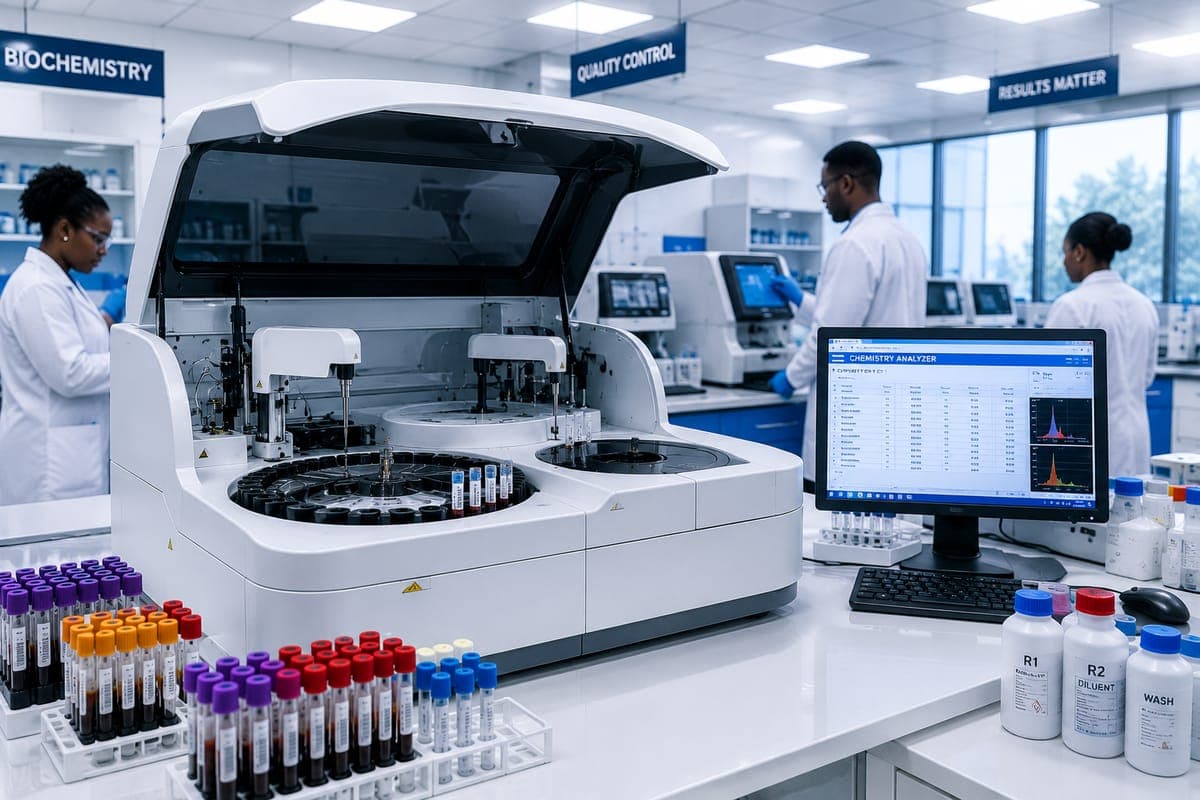
Overview
Modern hospitals depend heavily on fast and accurate laboratory diagnostics to support patient care, emergency response, treatment planning, and disease monitoring. As healthcare systems continue expanding across Kenya and East Africa, hospitals are increasingly investing in automated laboratory technologies to improve workflow efficiency and service delivery. Among the most important diagnostic systems in modern laboratories are clinical chemistry analyzers.
These systems automate biochemical testing processes, allowing healthcare facilities to process patient samples faster, reduce manual workload, improve accuracy, and enhance operational efficiency. From emergency departments and intensive care units to outpatient clinics and specialized laboratories, chemistry analyzers help hospitals make faster clinical decisions while improving patient management and reducing operational delays.
This guide explains how chemistry analyzers improve hospital efficiency and why modern healthcare facilities continue investing in laboratory automation systems. Table of Contents What Is a Chemistry Analyzer? Importance of Clinical Chemistry Testing Challenges Hospitals Face Without Automation Faster Laboratory Turnaround Time Improved Diagnostic Accuracy Reduction of Manual Workload Increased Sample Throughput Better Workflow Management Improved Emergency Response Integration with Hospital Information Systems Reduced Human Errors Better Reagent Management Improved Quality Control Reduced Operational Costs Enhanced Patient Care Benefits for Laboratory Staff Future of Hospital Laboratory Automation Frequently Asked Questions Conclusion What Is a Chemistry Analyzer?