
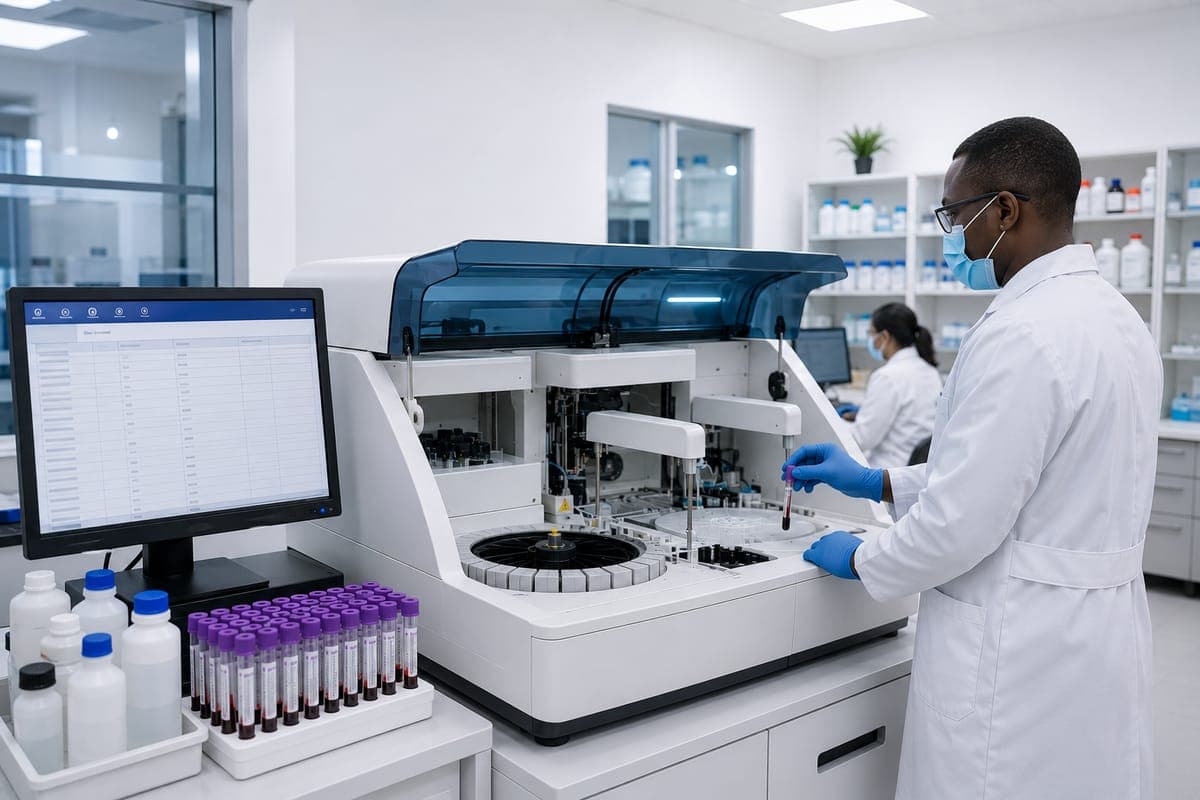
Overview
Clinical chemistry analyzers are among the most important diagnostic systems used in modern healthcare laboratories. These analyzers help hospitals, diagnostic centers, and research laboratories perform biochemical testing quickly, accurately, and efficiently. From liver function testing and kidney profiling to glucose monitoring and electrolyte analysis, chemistry analyzers play a major role in disease diagnosis, treatment monitoring, and preventive healthcare.
As healthcare facilities across Kenya and East Africa continue modernizing laboratory operations, automated chemistry analyzers have become essential for improving workflow efficiency, reducing turnaround time, and enhancing patient care outcomes. This guide explains how clinical chemistry analyzers work, the types available, their applications, maintenance requirements, reagent handling procedures, and how healthcare facilities can choose the right chemistry analyzer system.
Table of Contents What Is a Clinical Chemistry Analyzer? Importance of Clinical Chemistry Testing How Clinical Chemistry Analyzers Work Main Components of a Chemistry Analyzer Types of Clinical Chemistry Analyzers Semi-Automated vs Fully Automated Systems Common Chemistry Tests Performed Applications in Hospitals and Laboratories Benefits of Automated Chemistry Systems Importance of Reagent Quality Quality Control in Clinical Chemistry Preventive Maintenance Requirements Common Analyzer Errors and Troubleshooting Choosing the Right Chemistry Analyzer Future of Clinical Chemistry Automation Frequently Asked Questions Conclusion What Is a Clinical Chemistry Analyzer?
Software Interface
Processes results and manages workflow. Proper maintenance of these components is essential for analyzer performance. Types of Clinical Chemistry Analyzers Healthcare facilities choose analyzers based on workload, testing complexity, and laboratory size.
Semi-Automated Chemistry Analyzers
These systems require partial operator involvement. Common features include: lower acquisition cost moderate throughput manual reagent handling suitable for small laboratories They are widely used in: clinics health centers small diagnostic laboratories
Fully Automated Chemistry Analyzers
These systems automate nearly the entire testing process. Advantages include: high throughput minimal manual intervention advanced workflow automation improved efficiency reduced human error They are ideal for: referral hospitals large laboratories research institutions high-volume facilities Semi-Automated vs Fully Automated Systems Feature Semi-Automated Fully Automated Automation Level Partial Full Throughput Moderate High Manual Handling Higher Lower Cost Lower Higher Workflow Efficiency Moderate Advanced Maintenance Complexity Lower Higher Suitable For Small labs Large hospitals Laboratories should select systems according to operational requirements and long-term expansion plans.
Common Chemistry Tests Performed Clinical chemistry analyzers perform a wide range of biochemical tests.
Cardiac Markers
Used in cardiovascular disease assessment. These tests support rapid clinical decision-making. Applications in Hospitals and Laboratories Clinical chemistry analyzers are widely used in: emergency departments intensive care units outpatient laboratories inpatient services research institutions private diagnostic centers They support both routine screening and specialized diagnostics. Benefits of Automated Chemistry Systems Automation has significantly improved laboratory performance.
Key advantages include: faster turnaround time improved accuracy reduced manual errors increased throughput better workflow management improved sample traceability reduced reagent wastage Modern analyzers also integrate with Laboratory Information Systems (LIS) for seamless digital reporting. Importance of Reagent Quality Chemistry analyzers rely heavily on high-quality reagents. Poor-quality or incompatible reagents may cause: inaccurate patient results calibration instability analyzer errors increased maintenance costs shortened equipment lifespan Laboratories should always use: genuine reagents compatible controls approved calibrators Proper reagent storage is equally important for maintaining stability.
Quality Control in Clinical Chemistry Quality control ensures analyzer accuracy and reliability. Laboratories should routinely perform: daily control testing calibration verification reagent validation preventive maintenance environmental monitoring Consistent QC procedures help laboratories maintain accreditation standards and diagnostic confidence. Preventive Maintenance Requirements Routine servicing improves analyzer reliability and lifespan.
Available Budget
Both acquisition and operational costs should be considered.
Future Expansion
Facilities planning growth should consider scalable systems. Working with experienced laboratory equipment suppliers helps healthcare institutions select appropriate solutions. Future of Clinical Chemistry Automation Clinical chemistry technology continues evolving rapidly. Emerging trends include: artificial intelligence integration remote diagnostics cloud-based laboratory reporting improved workflow automation enhanced reagent management smart maintenance systems Modern laboratories are increasingly adopting fully integrated diagnostic automation systems.
Frequently Asked Questions