
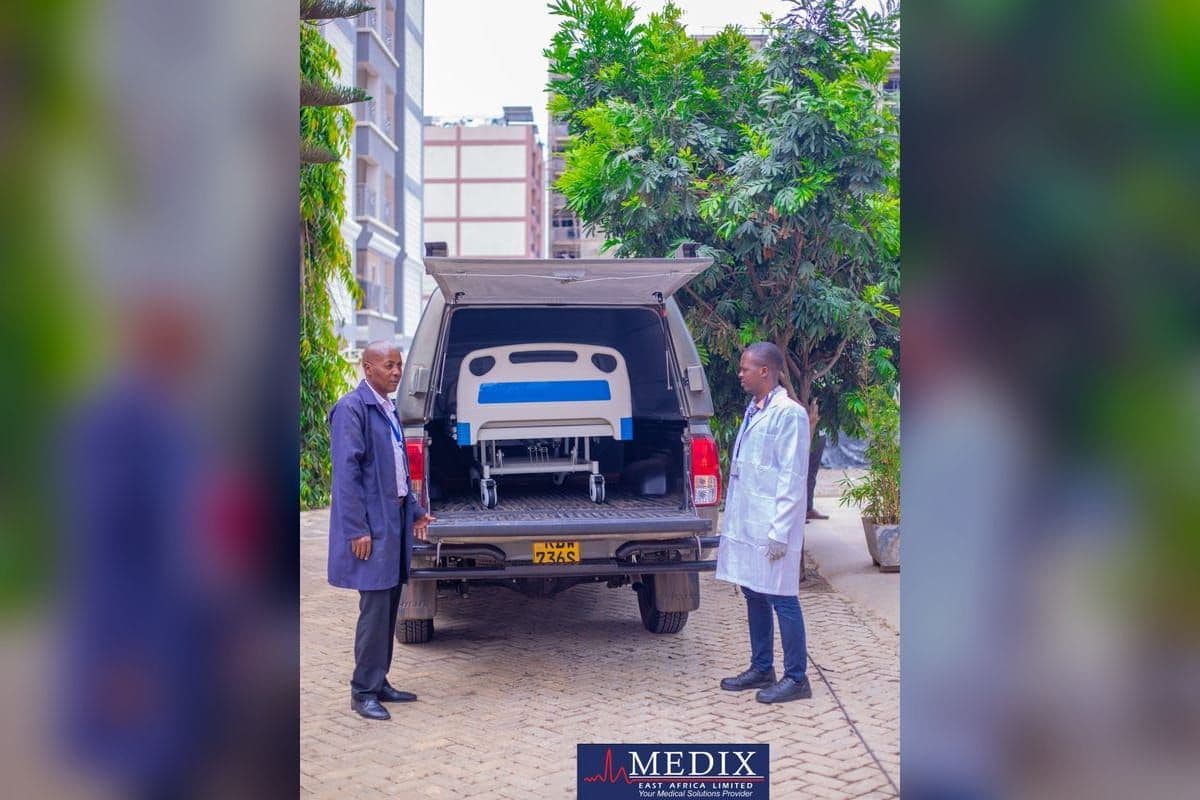
Equipment rarely fails the way people expect
Walk through the store room of almost any hospital in the region and you will find equipment that is not broken in any meaningful sense. A ventilator missing a sensor. An analyser out of calibration. A monitor with a failed battery. An autoclave whose gasket perished. In each case the unit is repairable, often cheaply, and in each case it has been out of service for months.
The common factor is not component quality. It is that no one owned the maintenance of that unit — no schedule, no named engineer, no parts route. When it stopped working, the path from fault to repair ran through a procurement cycle rather than a service visit, and the procurement cycle was slower than the clinical need.
What preventive maintenance covers
A preventive maintenance visit is not a repair. It is a scheduled inspection against the manufacturer's service checklist: functional testing, calibration verification, replacement of wear parts before they fail, cleaning of filters and fluid paths, battery condition checks, and safety testing where applicable.
The point is that most failures announce themselves. A battery losing capacity, a sensor drifting out of tolerance, a filter loading up — these are visible on a scheduled visit weeks before they take the equipment out of service. Catching them converts an emergency into a planned parts replacement.
The visit also produces a record. For facilities subject to inspection or accreditation, documented maintenance history is frequently the difference between a finding and a clean report.
Building a programme around an inventory
A maintenance programme starts with knowing what you own. That means an inventory listing make, model, serial number, location, installation date and current status for every item — including the equipment currently out of service, which is often where the quickest wins are.
From that inventory, equipment is banded by criticality. Ventilators, anaesthesia machines, defibrillators and infant warmers sit in the top band because failure has immediate clinical consequence. Laboratory analysers follow, because failure stops diagnosis. Ward furniture and general equipment sit lower.
Visit frequency then follows criticality and manufacturer guidance rather than being applied uniformly. A quarterly schedule for critical care equipment and a semi-annual schedule for general equipment is a common and defensible starting structure.
What an annual maintenance contract should include
An annual maintenance contract converts unpredictable breakdown costs into a planned budget line. A contract worth signing states the number and frequency of scheduled visits, the response time commitment for faults between visits, what parts are included and what are charged, whether labour and travel are covered, and what documentation is provided after each visit.
It should also name the equipment covered, by serial number. Contracts written against categories rather than assets create disputes at exactly the moment when a facility can least afford one.
Spare parts are the part that decides everything
A maintenance programme without a parts route is an inspection programme. The question to ask any service provider is not whether they can maintain the equipment, but what parts they hold locally for it, and what the lead time is for parts they do not hold.
This is the argument for concentrating equipment among fewer manufacturers where clinically acceptable. A facility running four ventilator brands needs four parts pipelines; a facility running one needs a single relationship that is worth the supplier maintaining.